
Landscape Design 6
Concept Development
This course explores the use of drawings as tools for visualization and design development. The focus is on developing an ability to use drawings to model and manipulate visual information throughout the various stages of design evolution. Techniques for examining ideas and concept alternatives through composite, perspective, orthographic, and axonometric drawings are explored. Lectures present examples of built projects and methods of recognized professionals, which illustrate the dramatic influence drawing type may have on the final form or organization of a design. The course requires intensive drawing time; students must have already mastered basic drafting and sketching skills.
Instructor
STEVEN CHAVEZ
Project Location
GREAT WALL OF LOS ANGELES
VALLEY GLEN/CA
judges
DYLAN ANSLOW – HERRERA INC.
KIM RHODES – DAVID EVANS AND ASSOCIATES, INC.
SEAN CARTER – SALT LANDSCAPE ARCHITECTS
SCRIBES
CHARLES LEAZER
MICHELLE LEVY
MICHELL
MICHELL

SCASLA Achievement Award
The opportunities-and-constraints analysis is comprehensive and shows a strong grasp of the site. Graphics are solid overall. This is a very good effort that reflects commitment and thoughtful study. The muted color palette is appealing. Connectivity is a clear strength: attention to bridge frequency and bike links to surrounding streets is compelling; expanding this network would further demonstrate integration with the broader urban fabric.
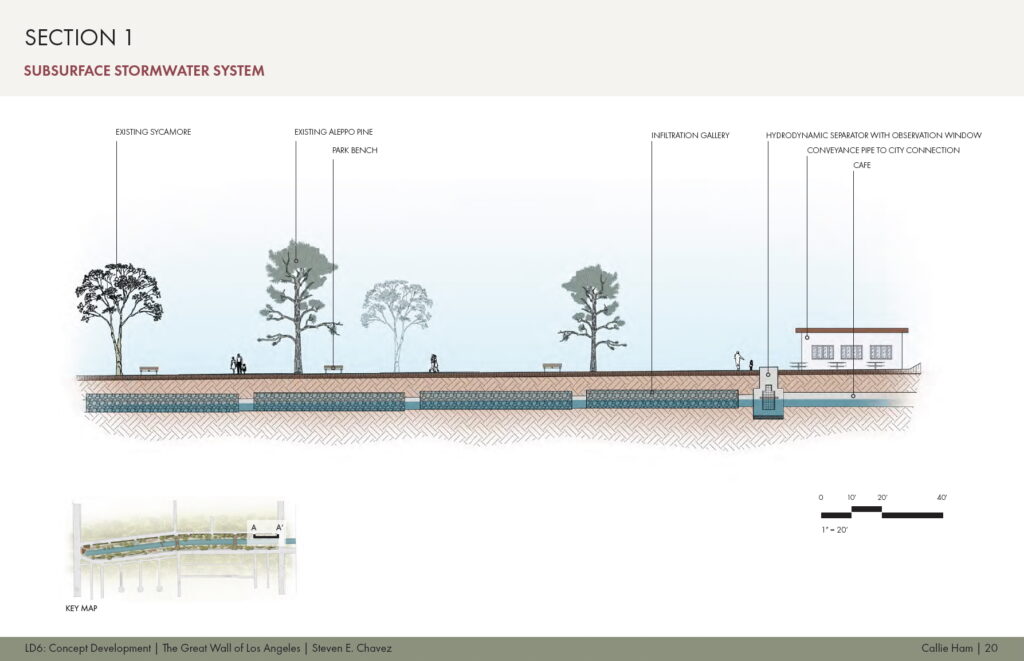
WATERSCAPE WALK
Student: Callie Ham
View PDF
SCASLA Achievement Award
The weaving seating walls along the Coldwater Canyon edge are particularly well resolved. The digital model is very well executed and adds clarity. Overall, the design feels practical and feasible while balancing creativity with real-world application.
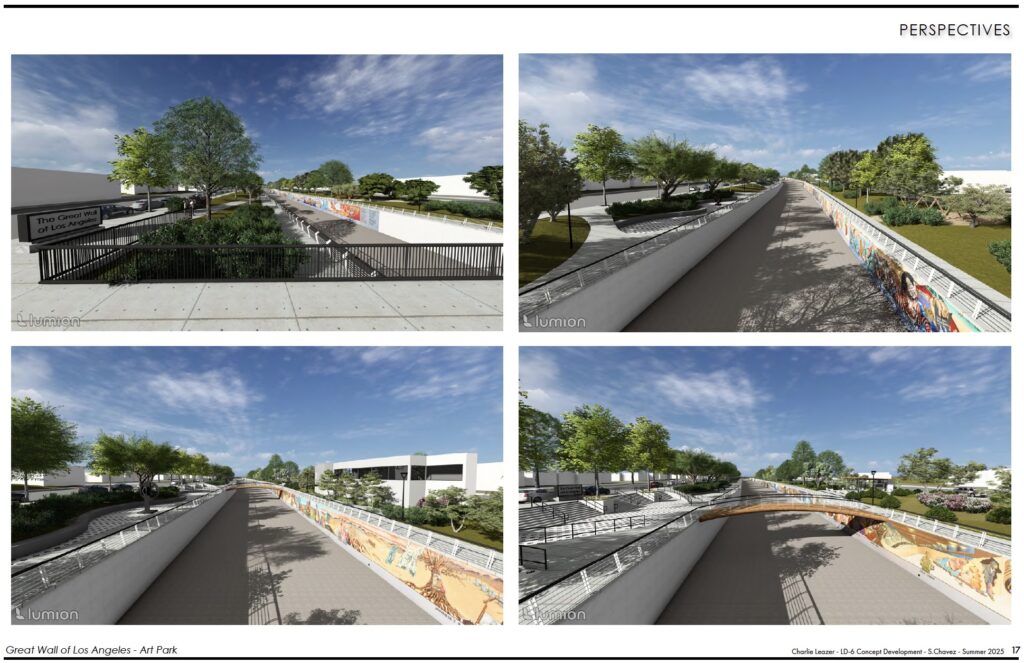
Great Wall of Los Angeles – Art Park
Park Plan & Strategy
Student: Charlie Leazer
Great Wall of Los Angeles Art Park.
View PDF
The Great Wall of Los Angeles
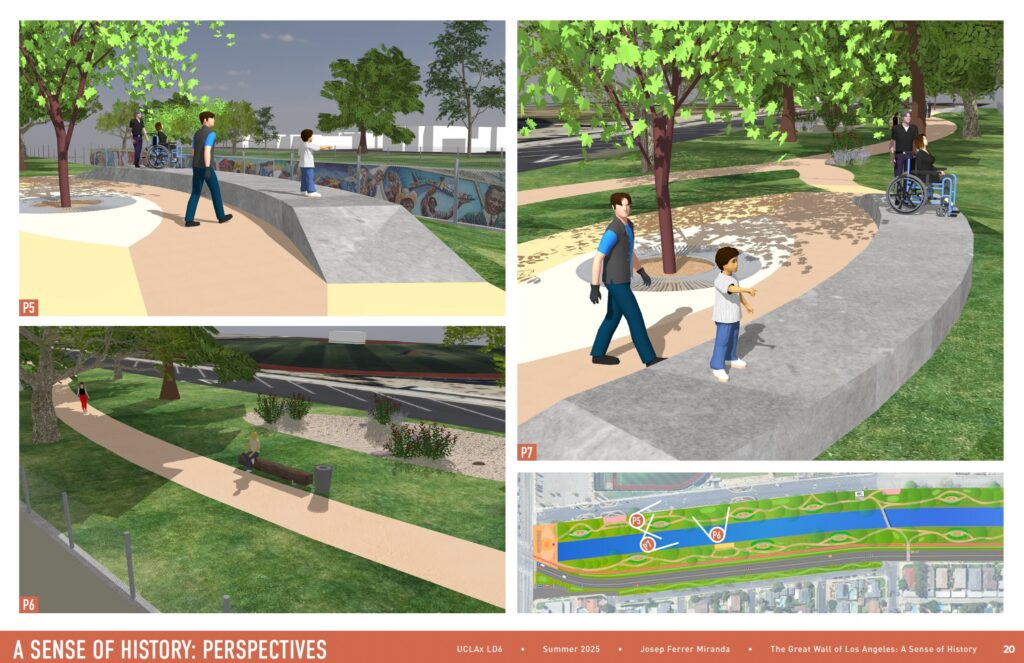
A SENSE OF HISTORY
Student: Josep Ferrer Miranda
“A Sense of History” re-invents The Great Wall of LA park by providing views of the famous mural for people of all abilities while maximizing water retention in the landscape and creating a dynamic, multi-faceted experience for visitors.
View PDF
The Great Wall of Los Angeles
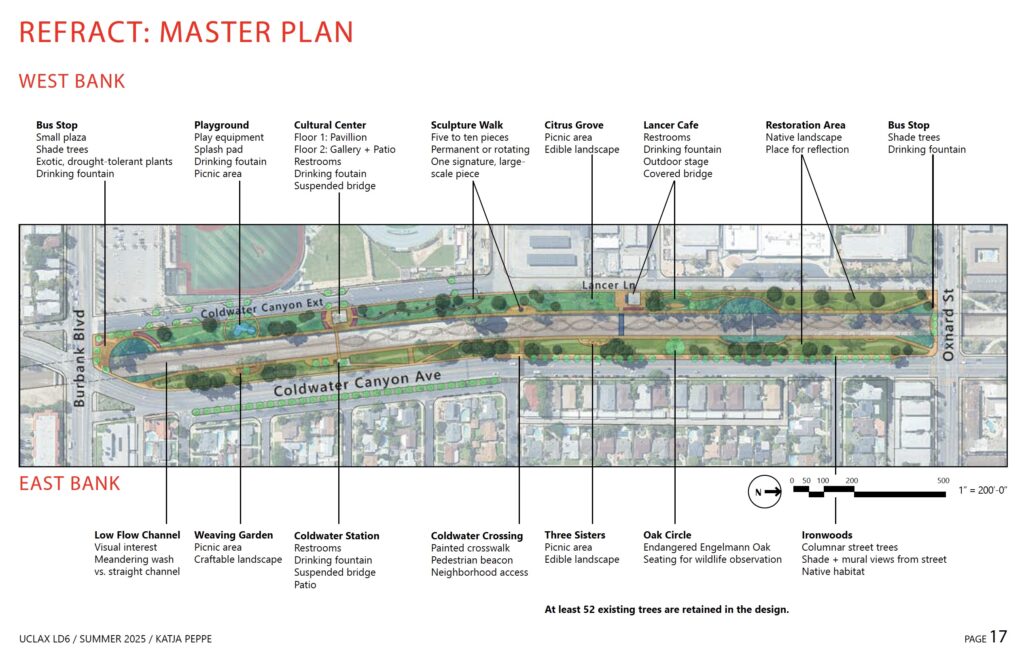
Art Park Master Plan
Student: Katja Peppe
“Refract” refers to the alteration of a view or scene by natural, physical processes.
View PDF
The Great Wall of Los Angeles Park Master Plan
Student: Kristin Byrd
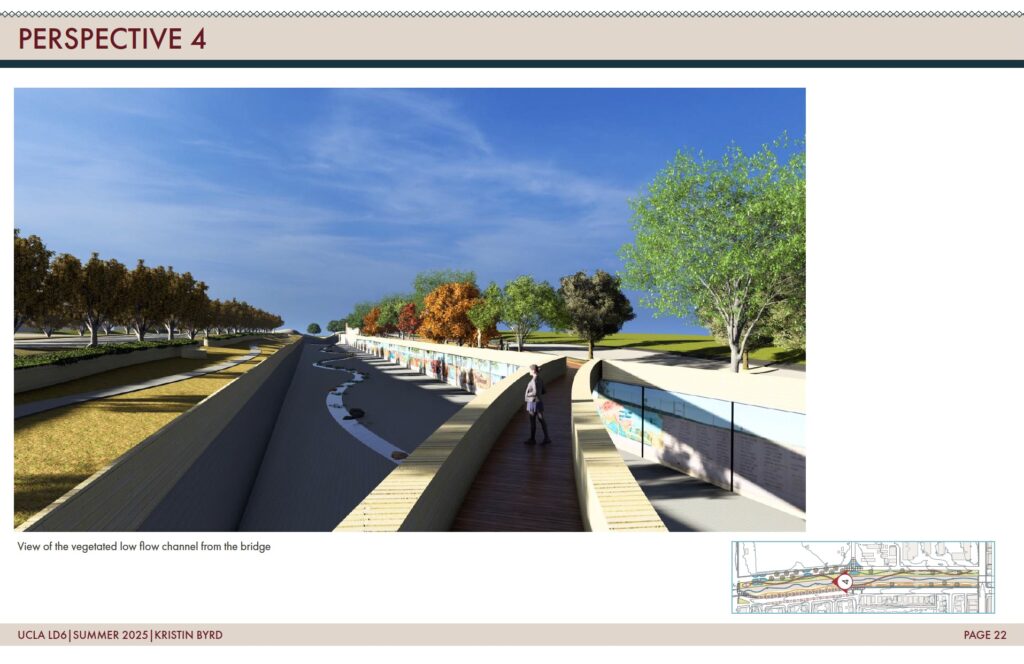
BRAIDED TIME is a place that honors the people and events that have overlapped, crossed or collided over time. Similar to these interwoven histories, the park pays tribute to the braided streams of the historical Tujunga Wash that meandered across the San Fernando Valley. The park design reflects these shared patterns of human and natural history by providing a space for people to meander through a timeline and pause at works of art that reflect events in history. The park also restores some of the natural functions of the historical Tujunga Wash, by including areas for water to slow and infiltrate the ground.
View PDF

SCASLA Excellence Award
The work demonstrates a well-executed articulation of the low-flow channel and a design that is evenly developed across the site. A thoughtful collage of case studies clearly traces influences into the proposal, and the separated pedestrian paths show a high level of consideration. Perspectives and video are strong—bright lighting, diverse entourage, and a rich planting palette with trees—while the canal and upland areas are conceived as a cohesive whole. The mural is effectively highlighted and integrated, and carrying a path across the channel is a particularly strong move. Drawings and video communicate the vision clearly; overall, every aspect feels thoughtfully addressed and well developed.
Bridging The Divide
Student: Mitch Miller
I aimed to create a diverse range of park programming elements to engage and connect the many communities of the San Fernando Valley. This park places a strong emphasis on the existing murals. It blends art, movement, and plant life in a vibrant, contemporary way. The overall design evokes an earthquake fissure, nodding to the area’s tectonic activity while amplifying the symbolic divide created by the canal. Much like Judy Baca’s work, which united communities through public art, this park aspires to bring people from all walks of life together in a shared space to interact, connect, and experience art collectively.
View PDF
The Great Wall of Los Angeles Park Master Plan
Student: Nikki Rinehart
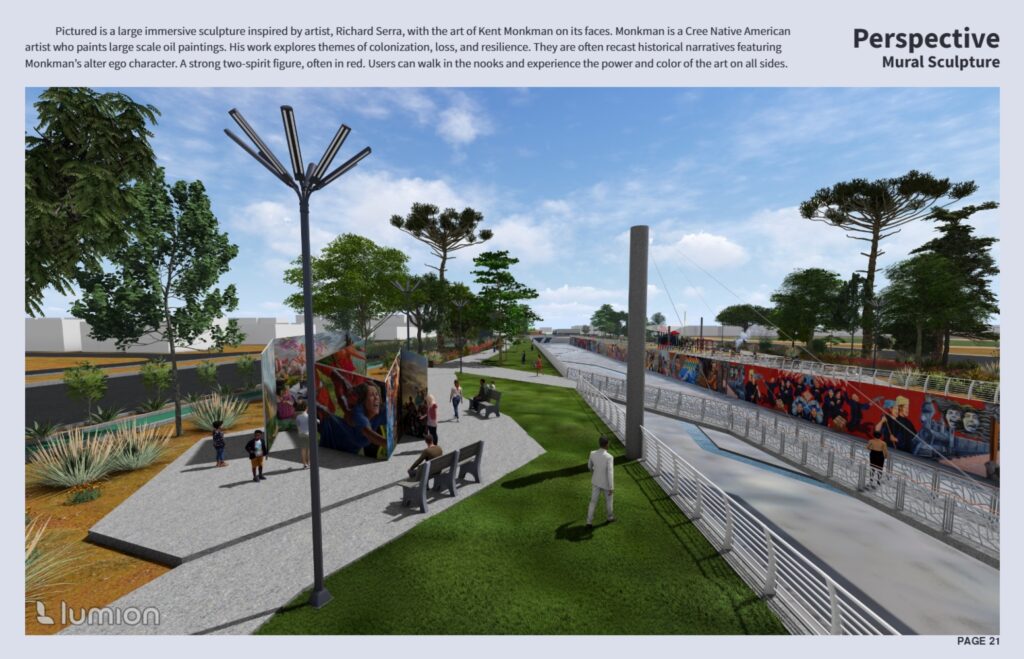
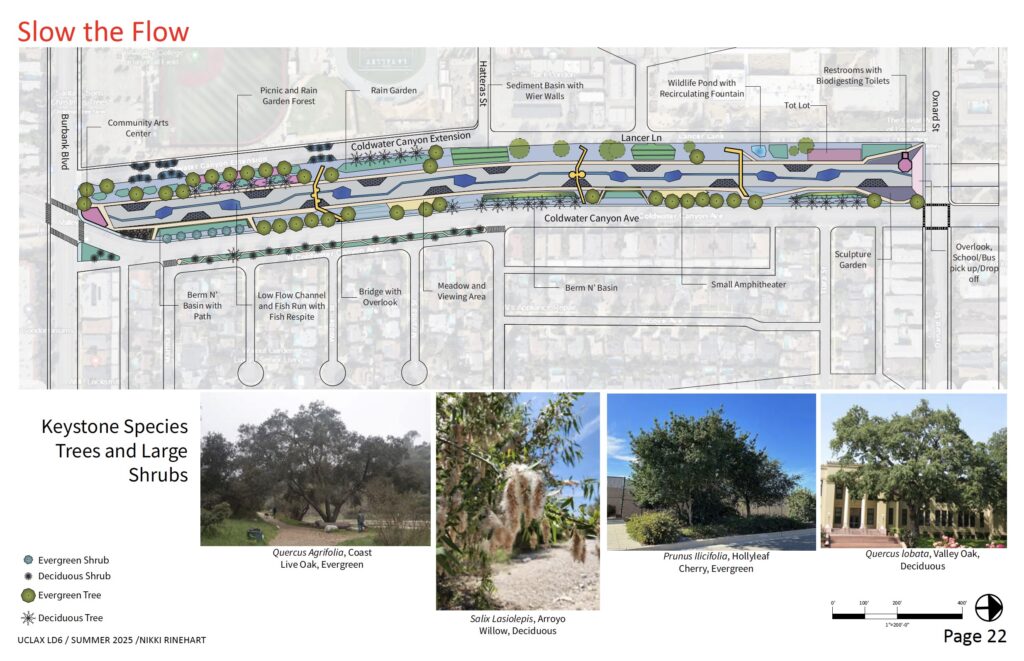
Slow the Flow by connecting with nature and community.
View PDF
SCASLA Achievement Award
An engaging, multifaceted proposal that integrates branding and art elements effectively, with well-considered bike lane connections to both proposed and existing networks. Enlargements help clarify components and reveal unique moments; illustrative master plan is strong. The work feels thorough and detail-oriented, with effective use of symbols and a notably intentional tree strategy in the minimal alternative—carry that same intentionality through the full planting palette. Graphics are visually impressive. Overall composition is effective, elevation changes are engaging, the twin bridges around the central node work well, and the sustainable design focus is appreciated. Strong use of space, movement, and perspectives adds significant weight to the presentation.
The Great Wall of Los Angeles Park Master Plan
Student: Patrese Winter
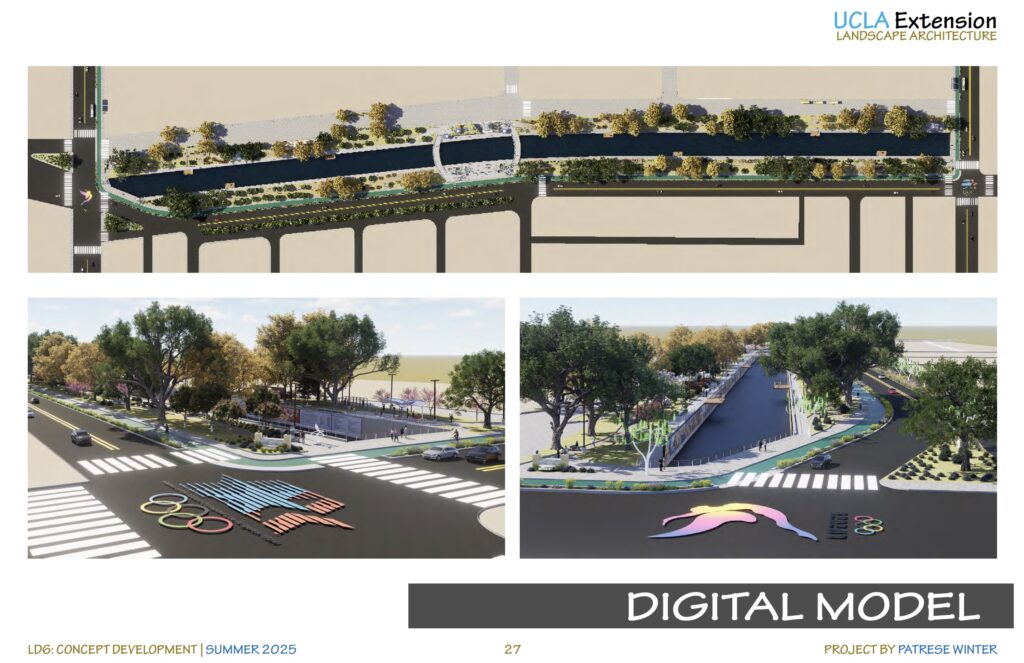
This project is a tribute to history, memory, and the communities whose stories shape us. In reimagining the park of the Great Wall of Los Angeles, I’ve not only explored the landscape but also the threads of resilience, justice, and belonging woven into it. This is where design becomes storytelling, where space honors spirit, and where the past inspires a more inclusive and hopeful future.
View PDF
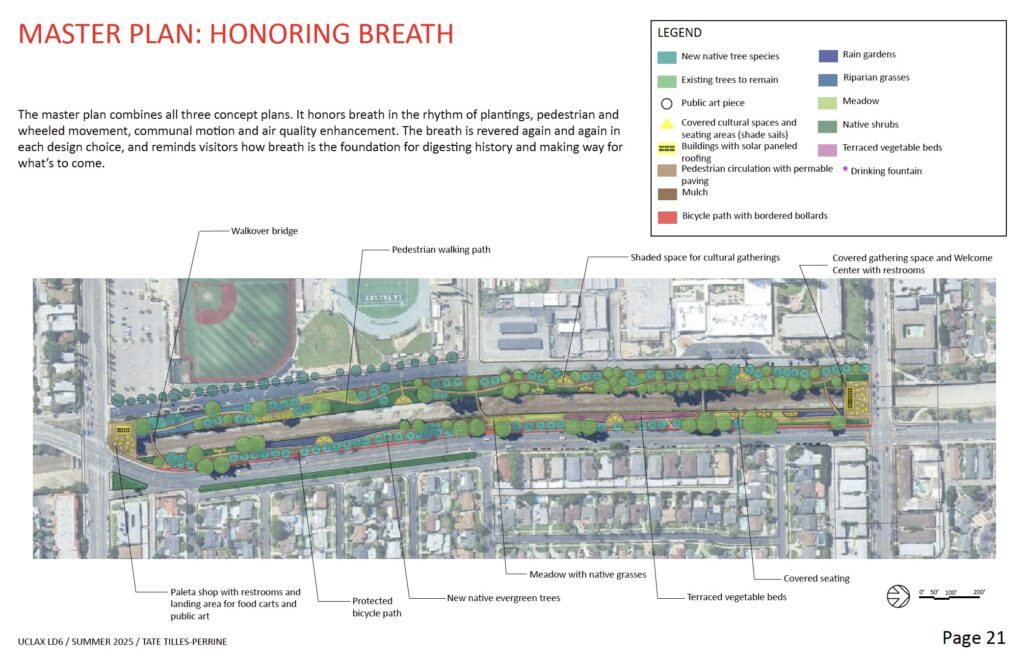
The Great Wall of Los Angeles Park Master Plan
Student: Tate Tille-Perrine
This is a reimagined design along a 1/2 mile stretch of the parkland surrounding the Tujunga Wash in the San Fernando Valley.
View PDF

SCASLA Honorable Mention
The work presents strong, well-articulated design alternatives with a clear parti. There’s a welcome nod to native flora and fauna, and the graphics read well overall. The guiding concept of tule grasses is compelling. The raindrop motif and use of tule reeds are appreciated, and the graphics, timeline, and site inventory are attractive, legible, and informative.
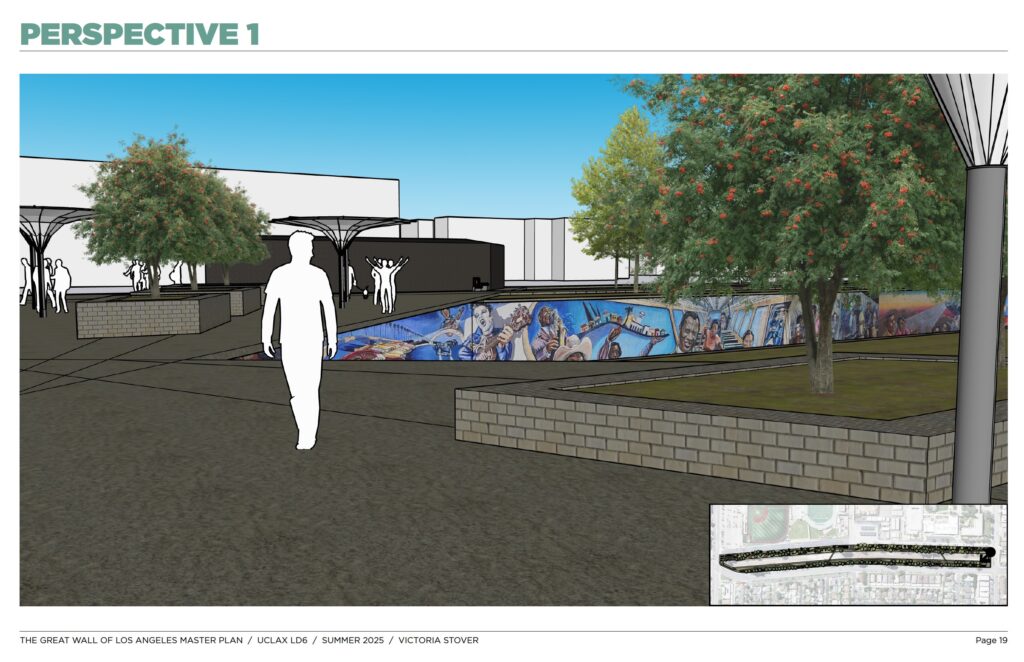
The Great Wall of Los Angeles Master Plan
Student: Victoria Stiver
This design reimagines The Great Wall of Los Angeles to embrace the story of the site’s natural and cultural history through the lens of tule reeds.
View PDF
SCASLA Excellence Award
A beautifully executed project from start to finish: engaging cover page; clear, easy-to-follow diagramming and site analysis (including an effective section within the site diagram); and a master plan that creates distinct moments and places to pause, with a particularly compelling lounging concept. Graphics are consistent and strong throughout, bus stop integration is well handled, and the timeline and stormwater section are carefully thought through. Thoughtful touches—like a lean rail over the channel—show how people will interact with the space, and the canal/upland areas feel cohesive. The design reads believable, with creative social steps and stargazing elements, and bright murals that highlight points of entry. Overall, a very strong, well-resolved proposal.
The Great Wall of Los Angeles
Art Park Master Plan
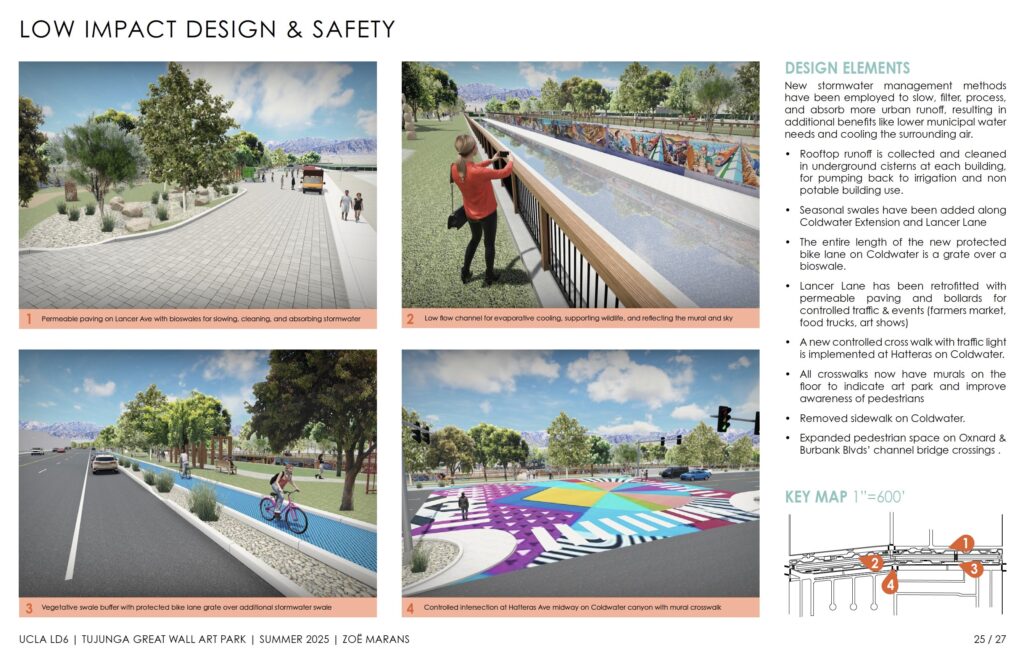
Student: Zoe Marans
This project was unique in that it was an extremely long, linear, and narrow park, bisected by the gaping Tujunga Wash concrete flood control channel. In other sites, we may have been able to dechannelize the walls to expand the usable site footprint, however the walls of this flood channel are the canvases for the beautiful and significant murals of the Great Wall of Los Angeles, a timeline of Los Angeles history, and therefore needed to be preserved and revered. My design was ultimately inspired by a unique moment floating over the river, where sky and valley meet, which symbolizes the story of the river’s history and stormwater’s journey, while also creating feelings of hope and optimism about the future. I focused my design on emphasizing and recreating more of these moments looking up and down the river channel, while also improving pedestrian safety and increasing onsite stormwater processing.