
Landscape Design 4
Environmental Analysis and Planning
This course studies the methods and attitudes of environmental research and analysis utilized by landscape architects. Students investigate the natural, historical, and cultural factors that impact land-use suitability, design programming, and design development. Instruction emphasizes the application of these methods to both the natural and built environments.
Instructor
EMILY GABELLUDDY WAI KIN SOO
Project Location
JOHNY CARSON PARK, BURBANK
judges
LORENA MATOS – CITY OF LOS ANGELES, STREETS LA
CHARLES STRAWER – CHARLES H. STRAWTER DESIGN INC.
ANGIE SONG – WALT DISNEY IMAGINEERING
SCRIBES
KRISTEN BYRD
VICTORIA STOVER

SCASLA Achievement Award
The judges praised the project’s clear “big idea” page and strong graphics, with effective use of color to delineate concepts. Site maps and diagrams conveyed connectivity well, particularly in the pathways and bubble diagrams. Inspiration and zone enlargements were also clear. Overall, the project communicated its vision with clarity and strength.
The River Junction
BY THE NORTH ARROWS
Students: Kristen Byrd | Holly Cory | Michelle Levy | Victoria Stover
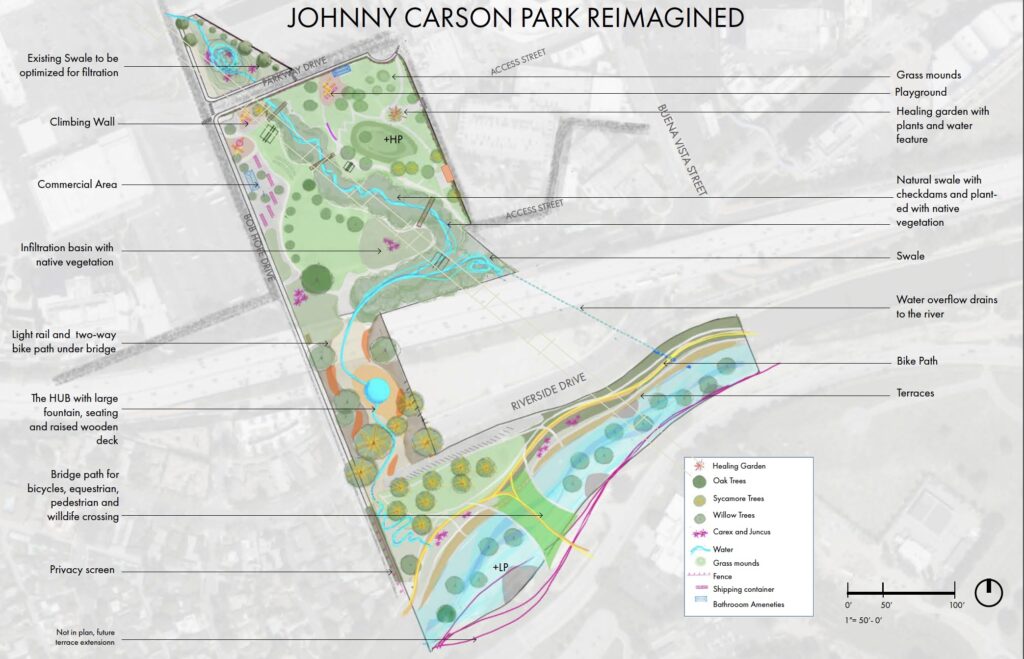
From an early concept development stage, our team made a decision to integrate future improvements at the future Dick Clark Dog Park adjacent to the site, and Pollywog and Headworks parks east of the site, focusing the “limit of work” on improvements to the existing Johnny Carson Park and Buena Vista Park that build connections to future nearby open spaces and the LA river. The project design enhances these connections along the edges and through the site, by improving the pedestrian experience along Bob Hope Drive with active retail uses, creating clear vistas from within Johnny Carson Park to the river which were once obstructed by the freeway, and promoting connections along Riverside Drive. Finally, converting existing vehicular driveways to shared streets/woonerfs will help create a more pleasant walking experience and bring foot traffic through the park to Buena Vista Drive to the east and Alameda to the north.
View PDF

SCASLA Excellence Award
The judges praised the professional presentation and clear flow of the booklet, moving seamlessly from regional context to detailed enlargements. History and site analysis pages were well organized, with useful photos on the constraints page. The final concept diagram showed strong process, and the site plan was clear and well-scaled. Sections highlighted important features, particularly the riparian roots. Overall, the project demonstrated clarity, continuity, and thoughtful design — an impressive and highly professional submission.
BURBANK BIOCORRIDOR: BRIDGING NATURE, COMMUNITY, AND INNOVATION.
BY FLOURISH COLLECTIVE
Students: Callie Ham | Linda Hsi | Patrese Winter
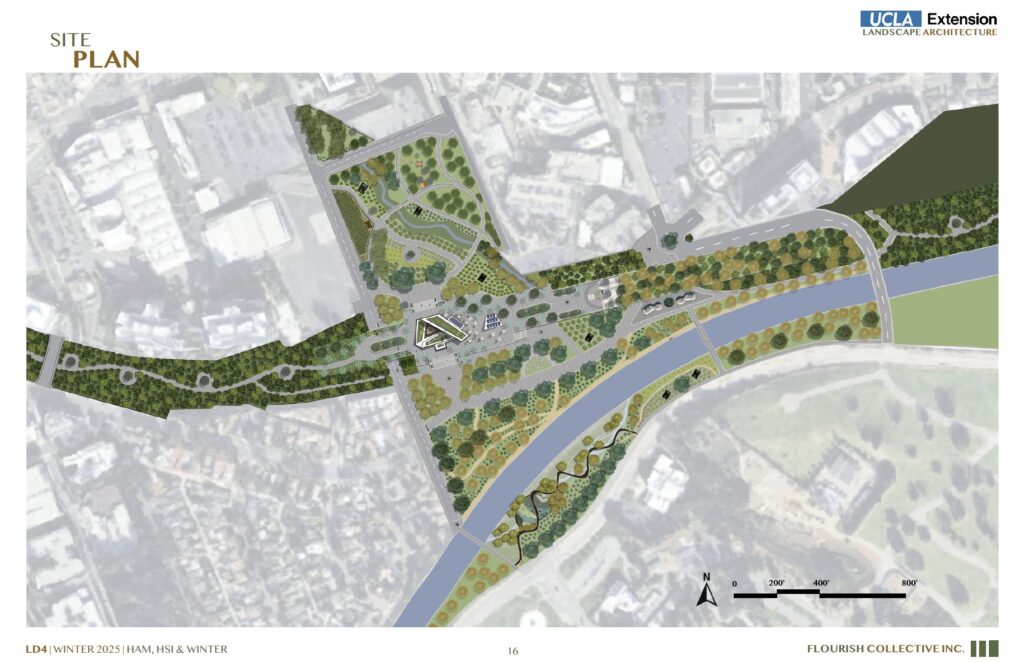
The Burbank Biocorridor is more than a park—it’s a movement to reclaim urban spaces, restore nature, and drive climate innovation. This project is proof that together, we can transform urban landscapes into living ecosystems and lead the way toward a healthier, more sustainable world. The time to act is now. Are you ready to change the world? We are!
View PDF
SCASLA Achievement Award
The judges appreciated the strong historical timeline and clear goals and objectives. The pages flowed like a brochure. The Embrace concept drawings stood out for their detailed process work, and the brighter colors of the master plan effectively communicated circulation hierarchy. Enlargements and vignettes were well done. Overall, a thoughtful and process-rich project.
RETURN TO THE RIVER
BY STUDIO TRACE
Students: Zoe Marans | Josep Ferrer Miranda | Katja Peppe
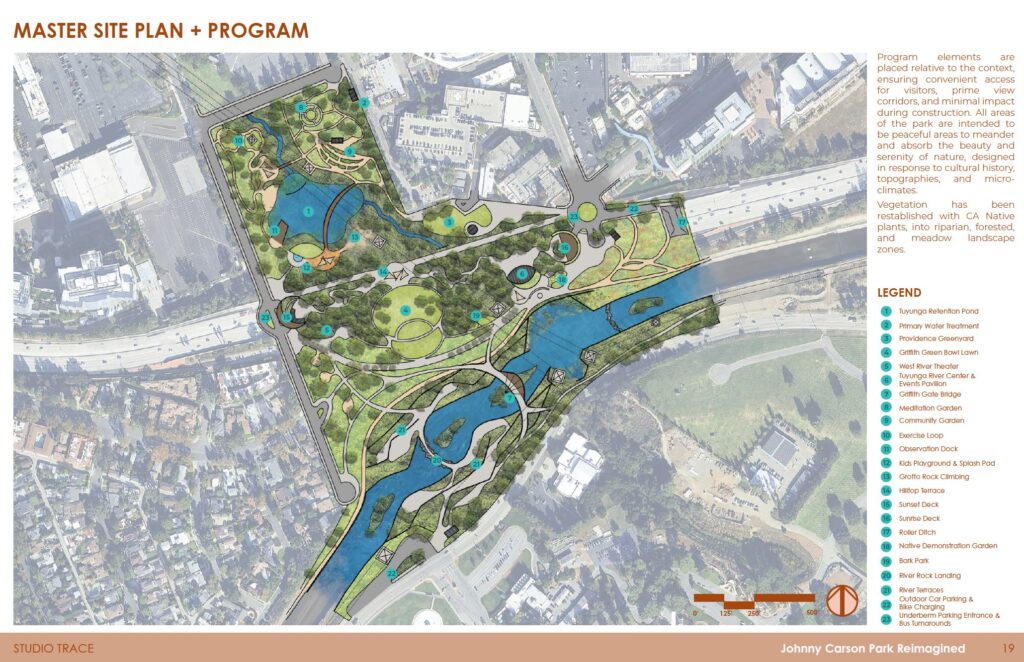
Our project created a public eco-park at the confluence of the Tujunga Wash and Los Angeles River in Burbank. We honored the environmental history of the seasonal waterways by dechannelizing the concrete LA river, implementing programming for recreation, conservation, and stewardship of the native riparian ecosystem, and managing both dry runoff and stormwater with a bioremediation retention pond that replaced the large lawn at Johnny Carson Park. Additional features include repurposing the decommissioned 134 freeway into a hilltop forest to capitalize on surrounding views while providing shaded parking under the berm, multimodal trails for pedestrians, bikes, and equestrian riders, and programming for various contextual users like a skatepark made of excavated concrete, a demonstration summer dry garden by the new River Community Center, and healing gardens near the hospital.